Storage battery
Without a battery, you sell to the grid at a low price what you will buy back at a higher price the same evening.
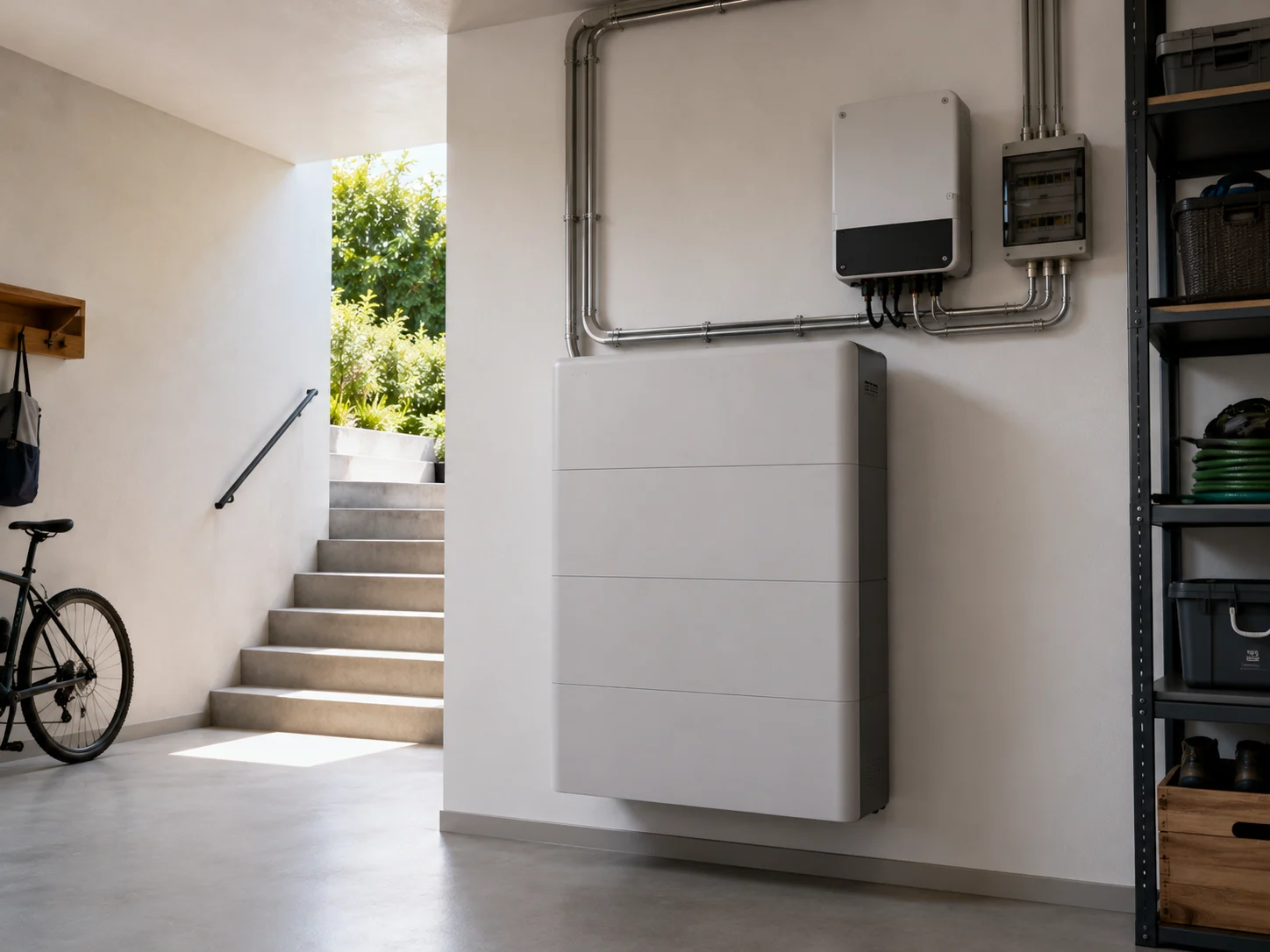
The problem storage solves
Your production peaks at midday, your consumption in the morning and evening. Without storage, about 70% of what you produce goes to the grid, paid well below the rate you pay to buy the same energy back a few hours later.
What a battery changes
The self-consumption rate rises from about 30% to about 70%. On an 8 kWp installation, that represents roughly 700 francs of extra savings per year.
The trade-off to know about, stated frankly
A battery lengthens the payback period slightly, because it is expensive to buy. But it greatly increases the total gain over the lifetime of the installation. The simulator shows both scenarios side by side: compare before you decide.
Frequently asked questions
- How long does a battery last?
- Current lithium iron phosphate batteries are warranted for around ten years or a few thousand cycles, and keep working afterwards at reduced capacity.
- What capacity should I choose?
- A capacity that is too large never fills completely and does not pay for itself. We size it on your evening consumption, not on midday production.
- Can a battery be added later?
- Yes, on an existing installation. It is even a good strategy if the initial budget is tight.